

Practical counting reality
Cycle counting and physical inventory are complementary operational tools rather than mutually exclusive choices. Many thriving independent stores use continuous cycle counts for fast-moving items alongside periodic broader store stocktakes.
Short answer: physical inventory vs cycle counting
At their core, the two inventory methods differ primarily by scope, timing, and operational disruption:
Physical Inventory
- Physical inventory: A comprehensive count verifying most or all inventory on hand at a single point in time.
- Scope & disruption: Full counts can require more operational control and may sometimes be performed outside trading hours to prevent customer sales from altering active counts.
Cycle Counting
- Cycle counting: An ongoing verification method where smaller selected portions of inventory are counted on a recurring schedule.
- Scope & disruption: Minimal store disruption because short batches can be completed in 10 to 20 minutes during quiet trading shifts.
Neither method is universally superior across all retail sectors. The right choice depends on store catalog size, opening hours, staffing levels, and specific accounting or ownership requirements.
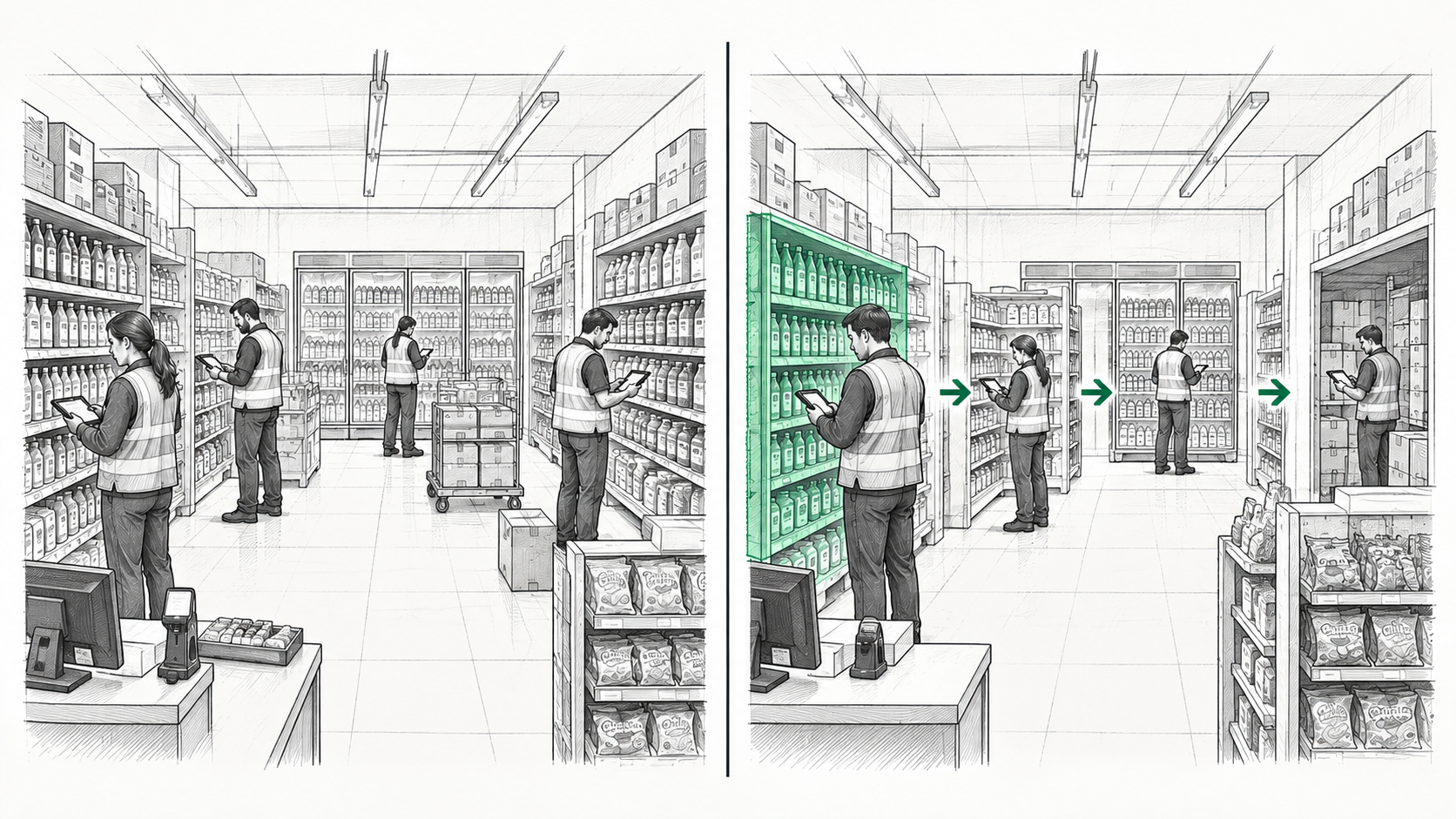
Comparison table: cycle counting vs full physical inventory
Compare how both inventory audit methods function across key operational dimensions:
| Operational Dimension | Full Physical Inventory | Recurring Cycle Counting |
|---|---|---|
| Scope of verification | All or nearly all products counted simultaneously across all fixtures. | Targeted subsets, specific aisles, or selected product categories. |
| Audit frequency | Periodic event (e.g. annual, semi-annual, or during major milestones). | Continuous (e.g. daily, weekly, or rotating monthly cycles). |
| Operational disruption | High disruption; full counts can require more operational control and may sometimes be performed outside trading hours. | Very low disruption; 10–20 minute counts integrated into normal daily staffing routines. |
| Pre-count preparation | Extensive store-wide tidying, fixture labeling, and staff scheduling. | Light preparation focused solely on the specific bay or shelf being counted. |
| Investigating discrepancies | Difficult; requires reviewing months of sales, receiving, and shrinkage records. | Fast and actionable; discrepancies can be traced back over days or weeks. |
| Staff workload | Intense, exhausting bursts requiring all available employees or temp counters. | Manageable, steady operational habit handled during quiet shifts. |
| Use during opening hours | Challenging during active customer foot traffic; often done during quiet lulls or closed doors. | Readily performed while trading by isolating short shelf sections. |
| Small store suitability | Essential for major fiscal milestones, ownership transfers, or complete resets. | Ideal for routine stock accuracy and preventing day-to-day stockouts. |
| Audit perspective | Historical snapshot of total asset valuation on one specific date. | Continuous operational verification of catalog accuracy and shelf integrity. |
What is a physical inventory count?
A physical inventory count is a complete, wall-to-wall stocktaking exercise where every sellable item, backroom carton, and display piece is physically counted and valued. Common small store milestones that call for a complete count include:
Fiscal year-end reconciliations:
Providing closing inventory valuation for balance sheets and tax filings where required.
Store acquisition or ownership change:
Establishing verified merchandise valuation during a commercial sale or partner buyout.
Major layout reset or store relocation:
Resetting base inventory counts after moving fixtures, aisles, or changing store premises.
System migrations:
Auditing all physical stock before importing catalog balances into new POS or store software.
Extensive book-to-physical catalog drift:
Reconciling widespread discrepancy accumulations that make day-to-day ordering unreliable.
What is cycle counting?
Cycle counting divides a retail catalog into manageable batches that are counted continuously according to a rotating operational timetable. Rather than a grueling multi-day shutdown, staff audit small sections as part of their routine workday. For example, an illustrative weekly schedule might look like:
Monday morning:
Refrigerated beverage cooler
High velocity, high customer handling, and frequent supplier direct-store deliveries.
Tuesday afternoon:
Front checkout impulse candy & snacks
High shrinkage risk and frequent impulse purchases with small physical units.
Wednesday morning:
Premium cosmetics and skincare drawer
High unit cost where single-item discrepancies materially impact store margins.
Thursday afternoon:
Backroom dry grocery, coffee and tea reserves
Auditing master cases before placing weekly distributor replenishment orders.
These categories and days are illustrative operational examples, not rigid universal requirements. Each retail business should design its counting timetable around its own layout, product categories, and staffing shifts.
Why smaller counts are easier to investigate
The fundamental operational advantage of cycle counting lies in the narrow investigation window it creates. When a discrepancy appears, staff only need to review transactions from the past few days:
Cycle count discrepancy (narrow window):
If 6 bottles of cold brew coffee are missing from a shelf counted yesterday, the manager only needs to review delivery receipts, cashier scans, and damage write-offs from the last 24 to 48 hours.
Annual count discrepancy (wide window):
If 30 units are missing after 12 months without a count, investigating the root cause requires auditing hundreds of receiving invoices, thousands of transactions, seasonal cashier turnover, and unrecorded breakages.
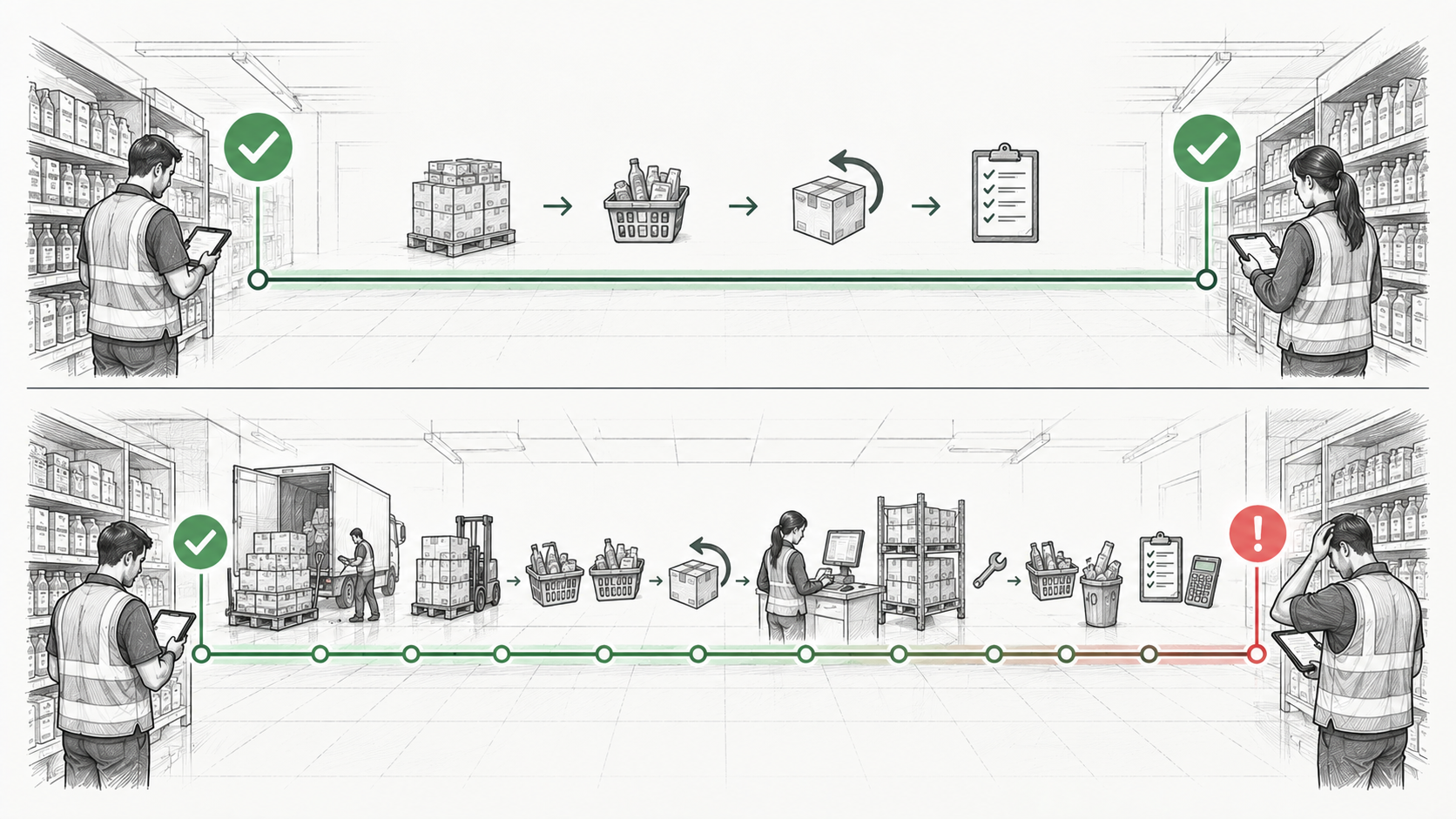
Cycle counting narrows the investigation window and reveals variances promptly, but it does not automatically eliminate theft or physical shrinkage without proactive management and store controls.
Zone-based cycle counting
In zone-based cycle counting, inventory is audited by physical store location rather than product classification. The store layout is divided into clearly designated physical sectors:
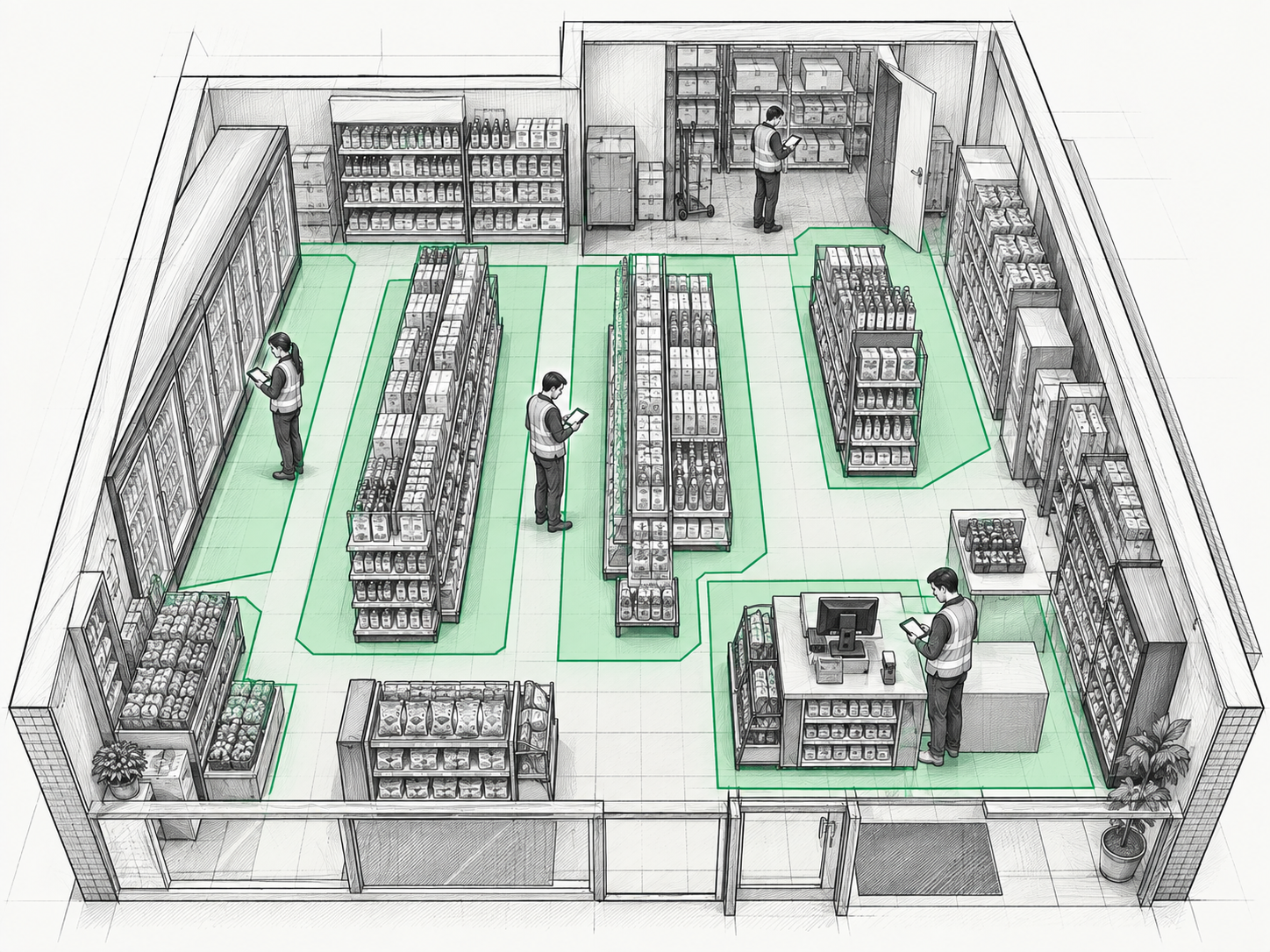
Refrigerated display cooler:
Audit bottles and cans door by door, checking behind front facings and sliding tracks.
Center floor grocery aisles:
Count bay by bay from top shelf to bottom shelf, keeping customer aisles clear.
Checkout impulse fixture:
Audit battery racks, candy bins, and register counters during quiet shift handovers.
Premium locked display case:
Count high-value electronics, specialty spirits, or luxury cosmetics with manager oversight.
Backroom reserve racking:
Verify unopened cartons on pallet shelves before reconciling against sales floor counts.
Item-based cycle counting
Item-based cycle counting prioritizes specific products or high-velocity categories across the store, regardless of where they sit physically. Common focal areas include:
High-value merchandise:
Vintage wines, specialty spirits, high-end electronics, or luxury cosmetics where errors carry substantial cost.
High-shrink staples:
Batteries, razor cartridges, baby formula, and OTC pain relievers that experience elevated theft rates.
Fast-moving everyday goods:
Fresh dairy, artisanal bread, craft beer, and best-selling snacks where stockouts immediately lose sales.
Critical production ingredients:
Espresso beans, specialty syrups, and bakery flour for cafes and food retail where shortages halt service.
Small retailers do not need rigid ABC percentage tiers (e.g. strict 80/15/5 rules) to benefit from item prioritization. Focusing on products that drive the majority of store revenue or carry high vulnerability is an intuitive, effective starting point.
When a full physical inventory is useful
While cycle counting maintains operational accuracy throughout the year, complete physical inventory counts remain essential under specific commercial circumstances:
Year-end financial audits & tax compliance:
Provides verified, comprehensive valuation of ending stock for balance sheets and corporate tax filings where legally required.
Ownership changes & partner buyouts:
Establishes independent, audited inventory valuations to protect both buyers and sellers during business transactions.
Major store resets & renovations:
Creates a clean baseline after completely reorganizing shelf layouts, fixtures, and gondolas.
Resolving chronic catalog drift:
Clears accumulated phantom inventory across neglected secondary categories that cycle counts have bypassed.
POS or inventory software migration:
Ensures opening balances in new software match exact physical counts on the sales floor.
When cycle counting is useful
Cycle counting is the optimal choice for ongoing store health and daily inventory control:
Stores that cannot afford to close:
Allows high-volume convenience shops and 7-day retailers to verify stock without sacrificing sales revenue.
Categories with high direct-store delivery (DSD) frequency:
Enables immediate auditing of bread, dairy, snack, and beverage deliveries as they arrive.
Perishable foods with short shelf lives:
Identifies approaching expiration dates and prevents food waste before stock spoils on shelves.
Recurring on-shelf discrepancy patterns:
Provides fast operational feedback to identify cashier scanning errors, vendor shortages, or shoplifting spikes.
Small staff teams with limited hours:
Transforms an overwhelming multi-day inventory ordeal into routine 15-minute daily operational tasks.
Can you combine both methods? The hybrid approach
Many well-managed independent retail stores do not choose one method over the other. Instead, they use a practical hybrid workflow combining regular cycle counts with periodic broader reconciliations:
Continuous targeted cycle counts:
Daily or weekly verificationFast-movers, high-shrink SKUs, refrigerated coolers, and critical daily essentials.
Rotating category audits:
Monthly or bi-monthly reviewsSecondary grocery aisles, packaged dry goods, hardware, and seasonal merchandise.
Broader store-wide reconciliation:
Periodic or annual milestoneFull-store audit to confirm total balance sheet valuation and satisfy fiscal requirements where applicable.
Combining continuous counts with periodic broader reconciliations is a common commercial practice, but specific statutory reporting cadences vary by jurisdiction. Consult your accountant to verify regulatory compliance.
Example counting schedule for a small store
Small stores benefit from having a structured rhythm. Treat this schedule as an illustrative starting point:
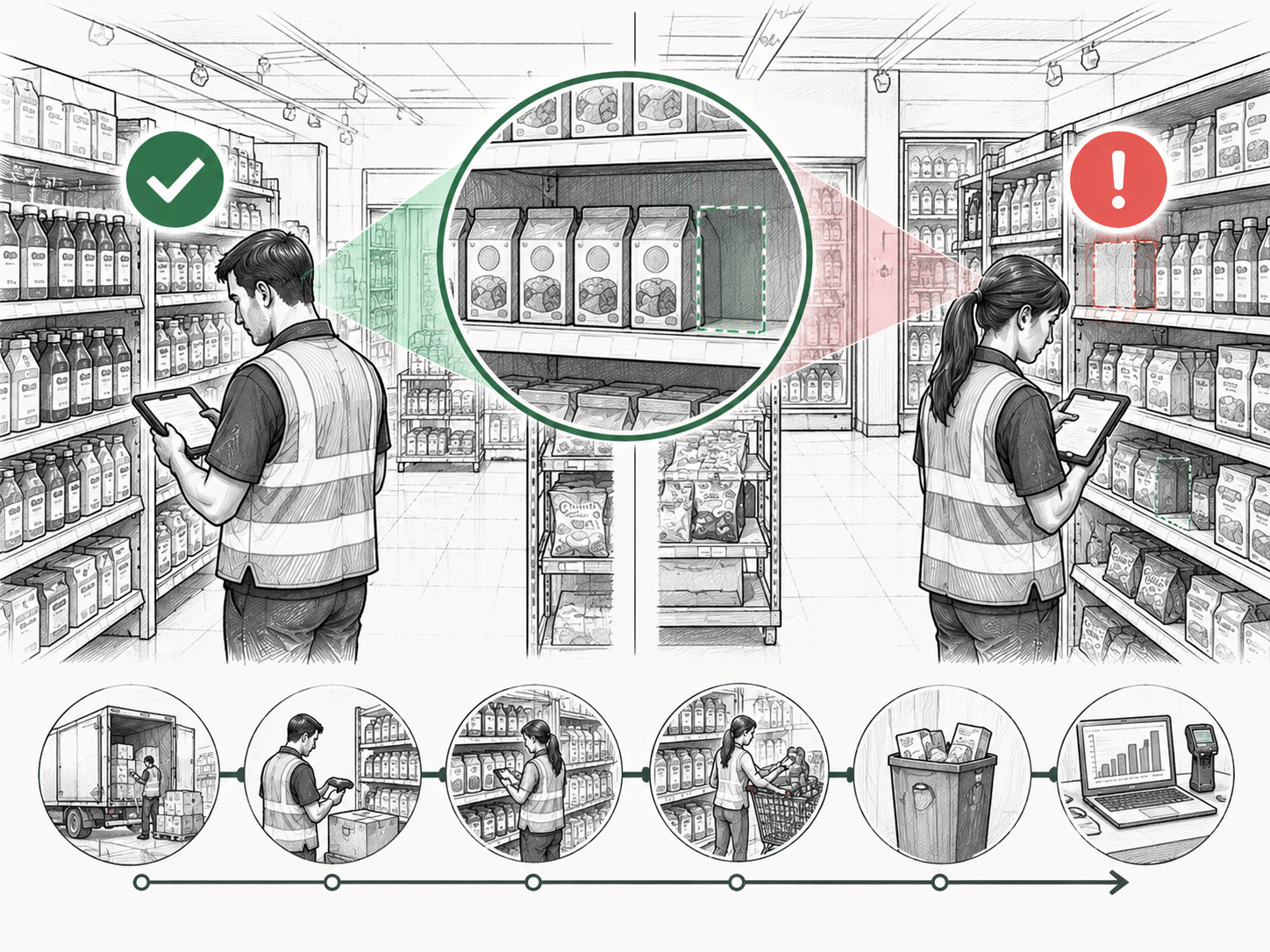
Illustrative Starting Point
Daily / Several times per week
10–15 minutes before opening or during quiet afternoon shiftsSelected high-value or fast-moving items (beverage cooler, top 10 retail SKUs, checkout impulse rack)
Weekly
20–30 minutes before weekly supplier orders are draftedOne or two fast-moving product categories (dairy, packaged snacks, craft beer, specialty cosmetics)
Monthly
45–60 minutes scheduled across quiet weekday morningsLarger rotating store sections (dry grocery aisle, pet food, cleaning supplies, backroom reserve rack)
Periodic / Fiscal milestone
Scheduled outside peak trading hours as required by store policy or accounting needsBroader store reconciliation covering all fixtures and reserve storage
Do not view this schedule as a mandatory operational rule. Tailor the cadence to your specific store foot traffic, supplier delivery frequency, and available staff capacity.
Common cycle-counting mistakes to avoid
When small stores introduce cycle counting, execution mistakes can compromise the accuracy of the records:
❌ Constantly shifting count zone boundaries:
✓ Correction: Clearly label shelves and fixtures. If zone boundaries shift arbitrarily, items on border shelves get counted twice or skipped entirely.
❌ Counting while active replenishment is underway:
✓ Correction: Never count a shelf while a team member is actively unpacking new delivery cartons into that same bay.
❌ Ignoring secondary and reserve locations:
✓ Correction: Always check backroom reserve boxes, clip strips, and endcaps so you do not undercount items that sit in multiple spots.
❌ Case pack versus each unit confusion:
✓ Correction: Standardize whether you are counting master cartons or individual retail units before scanning barcodes.
❌ Recounting variances without investigating root causes:
✓ Correction: A count discrepancy is a symptom. Investigate whether the gap stems from receiving errors, cashier mis-scans, or theft.
❌ Failing to document what was counted and when:
✓ Correction: Keep clear records of completed count documents so staff know which fixtures were audited and when the next rotation is due.
How Retail Scan & Stock fits your counting workflow
Retail Scan & Stock is designed around practical shop floor workflows, supporting both routine cycle counting and broader store stocktakes:
Fast phone-based camera scanning:
Scan retail barcodes using your iOS or Android device camera without purchasing dedicated handheld laser hardware.
Separate, organized count documents:
Create dedicated count sessions for individual zones, fixtures, or categories (e.g. 'Cooler Bay 1' or 'Aisle 2 Dry Grocery').
Reliable offline and local-first architecture:
Keep scanning inside metal walk-in coolers, basement stockrooms, and dead zones with zero network latency.
Structured spreadsheet exports:
Export count records to clean Excel-compatible or CSV files to compare physical counts against your POS registers or supplier records.
Cloud sync across team devices on paid plans:
Upgrade when your business needs multi-device collaboration and cloud synchronization across your supported account devices.
Retail Scan & Stock provides phone-based physical counts, separate document sessions, and spreadsheet exports; it does not feature automated cycle-count scheduling, AI discrepancy classification, or concurrent multi-user same-document counting.
Frequently Asked Questions
Does a small store legally have to perform an annual physical inventory count?▾
Tax and accounting regulations vary significantly across jurisdictions and business structures. While many tax authorities require an accurate valuation of ending inventory, some jurisdictions accept verified cycle-counting systems. Consult your accountant or tax adviser to determine your legal obligations.
Can cycle counting completely eliminate retail inventory shrinkage?▾
No counting method can eliminate shrinkage on its own. Cycle counting provides early visibility into discrepancies so you can identify patterns, but reducing shrinkage requires operational follow-through such as receiving audits, cashier training, and physical security.
How many items should a small retail store count during a single cycle count?▾
A good operational rule of thumb is a batch size that takes 10 to 20 minutes to complete (typically 20 to 60 SKUs). Short counts prevent staff fatigue, fit into normal shifts, and minimize the risk of customer sales interrupting the count.
Should cycle counts be performed during open store hours or after closing?▾
Both approaches work. Because cycle count batches are small, many stores conduct them during quiet trading hours by isolating one shelf bay at a time. High-volume stores with constant customer traffic may prefer quick 15-minute counts right before opening.
What should I do when a cycle count reveals a significant inventory variance?▾
First, recount the physical shelf to rule out counting errors. Then inspect secondary displays, customer return holding bins, and backroom reserve stock. If the variance is real, check recent delivery receipts and point-of-sale transaction logs to identify the root cause.
How do I choose between zone-based and item-based cycle counting?▾
Zone-based counting is best for tidying shelves, verifying entire fixtures, and checking general grocery or convenience aisles. Item-based counting is superior for auditing high-value goods, fast-moving items, and categories with frequent supplier deliveries.
Can I use Retail Scan & Stock for both cycle counting and full annual stocktakes?▾
Yes. You can use the app to conduct quick 10-minute zone cycle counts or create comprehensive full-store count documents, then export clean CSV or Excel spreadsheets for your bookkeeping and variance reviews.
Related inventory guides and resources